Low-slope roofing for multi-tenant industrial flex space in Indianapolis, IN. We manage penetration-heavy decks, tenant turnover, and warranty zones across Park 100 and AmeriPlex.
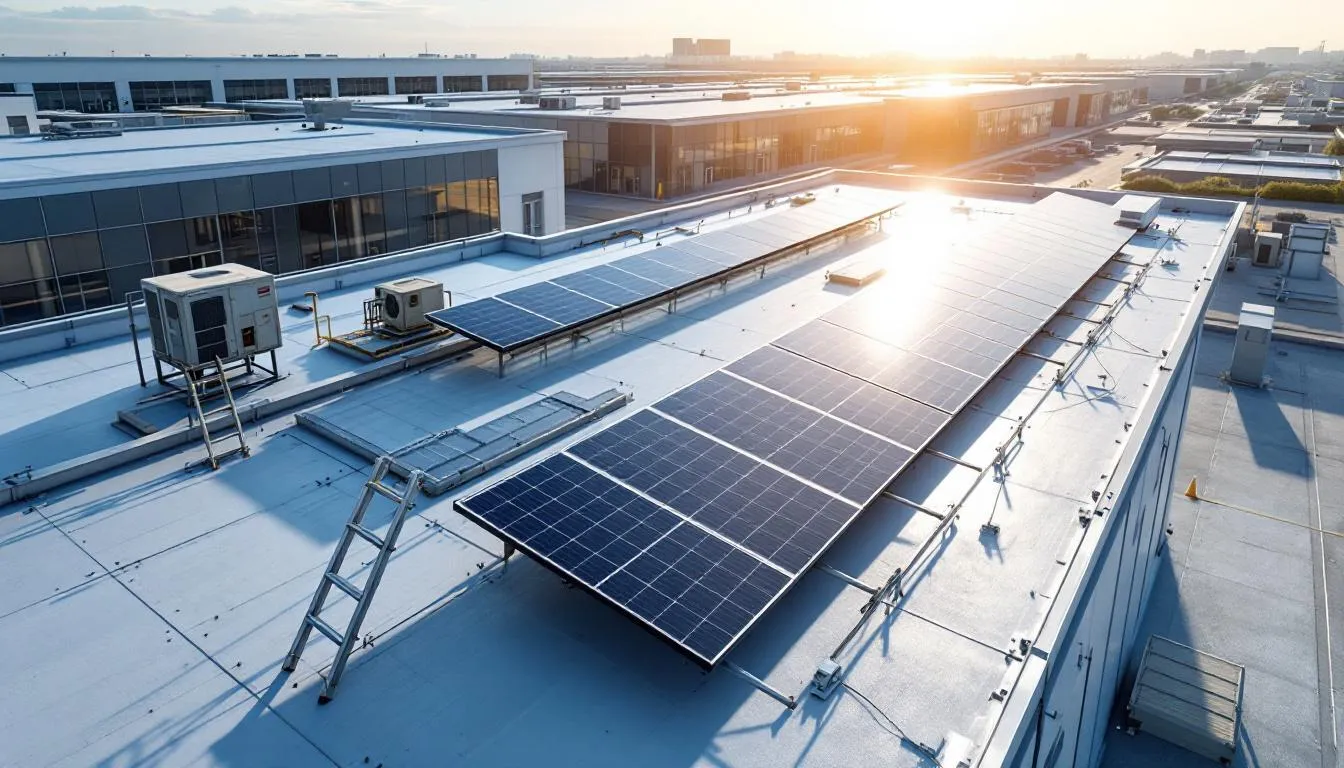
A flex building is a roofing problem disguised as a simple box. From the parking lot it looks like one long low-slope roof, but underneath that membrane sit four, six, sometimes a dozen separate tenants, each with their own rooftop units, exhaust fans, and after-hours requests. We roof these buildings throughout the Indianapolis market, from the older multi-tenant stock around Park Fletcher and Eastgate to the newer speculative product going up in AmeriPlex at the Crossroads in Plainfield and the long-established Park 100 development on the northwest side. The economics that make flex space attractive to a landlord are the same economics that make the roof harder to manage than a single-occupant warehouse.
Indianapolis sits at the convergence of I-70, I-65, I-74, and the I-465 loop, which is exactly why so much light-industrial and flex inventory clusters here. That logistics advantage fills these buildings with a churning mix of small distributors, contractors, light assembly shops, and back-office users. Every time a tenant rolls over, something happens on the roof: a new rooftop unit gets set, an old curb gets abandoned, a vent gets added for a paint booth or a commercial kitchen. The roof becomes a record of every lease the building has ever signed, and that history is usually written in sealant.
On a single-tenant box, you might have a handful of roof penetrations. On a flex building of the same square footage, you can have dozens. Each demising wall between suites tends to bring its own HVAC unit, its own plumbing vents, and its own electrical and data runs poking through the deck. Every one of those penetrations is a place where water wants to get in, and the flashing detail at each one ages on its own schedule. We have walked flex roofs in Indianapolis where the field of the membrane had years of service left, but the curb flashings and pipe boots were failing one after another because they had been added piecemeal over a decade of tenant fit-outs.
This is the core reality of flex space roofing: the field of the roof is rarely the issue. The penetrations, the terminations, and the transitions are. When we assess one of these buildings, we count and photograph every penetration, note which ones are live and which are abandoned, and flag the ones that were clearly added after the original roof went down. Abandoned curbs from a departed tenant are a common and avoidable leak source. They sit there capped with a piece of plywood and some mastic, and the first hard central-Indiana freeze-thaw cycle finds the gap. We recommend properly removing and infilling dead penetrations rather than leaving the deck looking like a pincushion.
The hardest part of a flex roof is not technical, it is organizational. In a multi-tenant building, no single occupant feels responsible for the roof, and the landlord often only hears about it when something drips onto a tenant's inventory. By then the leak has usually traveled. Water that enters at a failed curb on the north end can run along the deck flutes and show up as a stain two suites away, which sends everyone chasing the wrong spot. We track leaks back to their actual entry point rather than patching where the ceiling tile is wet, because on a flex building those are almost never the same place.
We also work with landlords to keep tenant rooftop work from quietly voiding the roof warranty. When a new tenant's HVAC contractor sets a unit or cuts in a vent without coordinating the flashing, the manufacturer's warranty on that section can lapse, and nobody finds out until there is a claim. Establishing a simple rule that any rooftop penetration goes through the roofing contractor protects the asset and keeps the warranty intact across every suite.
Most Indianapolis flex buildings carry a single-ply membrane, and for good reason. A reflective TPO or PVC system handles the wide summer-to-winter temperature swing this part of Indiana delivers, and the welded seams give us clean, durable detailing around the heavy penetration load these roofs carry. PVC in particular earns its place where a tenant's exhaust puts grease or chemical vapor onto the roof surface, since it resists that kind of attack better than other membranes. Where a roof is being recovered rather than torn off, we look hard at the existing deck and insulation for trapped moisture before committing, because a recover over a wet substrate just buries the problem.
Drainage gets complicated on flex roofs because the original design assumed an open deck, and years of added equipment can dam up the flow. Rooftop units, their condensate lines, and clusters of conduit create little reservoirs where water sits after every rain. Standing water accelerates membrane aging and, in an Indianapolis winter, becomes a freeze-thaw wedge that works seams apart. We map ponding patterns and correct them with tapered insulation, additional drains, or relocated equipment so the roof actually sheds the way it was meant to.
A flex roof rewards a maintenance program more than almost any other building type, precisely because so much changes on it. We set up scheduled inspections that catch the new penetration a tenant added without telling anyone, re-seal terminations before they open up, and clear the debris that collects in the dead spots between units. Twice-yearly visits, timed before and after the worst of the Indianapolis winter, catch the freeze-thaw damage early when it is a tube of sealant instead of a tear-off.
For owners holding several flex buildings across the AmeriPlex, Park 100, and Eastgate areas, we manage roofs as a portfolio. That means consistent records, prioritized repairs based on actual condition rather than the loudest tenant complaint, and capital planning that lets you stage replacements across budget years instead of getting surprised by three roofs failing at once. The goal is straightforward: keep every suite dry, keep every warranty valid, and keep the roof from becoming the reason a tenant does not renew.
Flex tenants run different hours and have different tolerances for disruption. A logistics user might not care about noise; a small medical or back-office tenant in the same building absolutely will. We sequence work to keep access lanes open, stage materials to avoid blocking dock doors, and coordinate any tie-ins that affect a specific suite directly with that occupant. The building stays in operation while the roof gets handled, and the landlord does not field a week of angry calls.
If you own or manage flex space anywhere across Indianapolis and Marion County, we can walk the roof, give you an honest read on what is failing and what has life left, and lay out a plan that fits the multi-tenant reality of the building. The roof on a flex property is never just one roof, and we treat it accordingly.
Tell us about the building and the roof problem. We'll document it and put a plan in writing — with an honest repair-vs-replace recommendation and no upsell pressure.
Get a Roof Assessment →
Commercial & industrial roofing across Central Indiana — documented scopes, honest priorities, and roofs scoped to how your operation runs.