A roof service agreement keeps your building open for business — two scheduled rooftop visits a year, a pre-winter drain clearing, and a crew that already knows your roof when something urgent comes up.
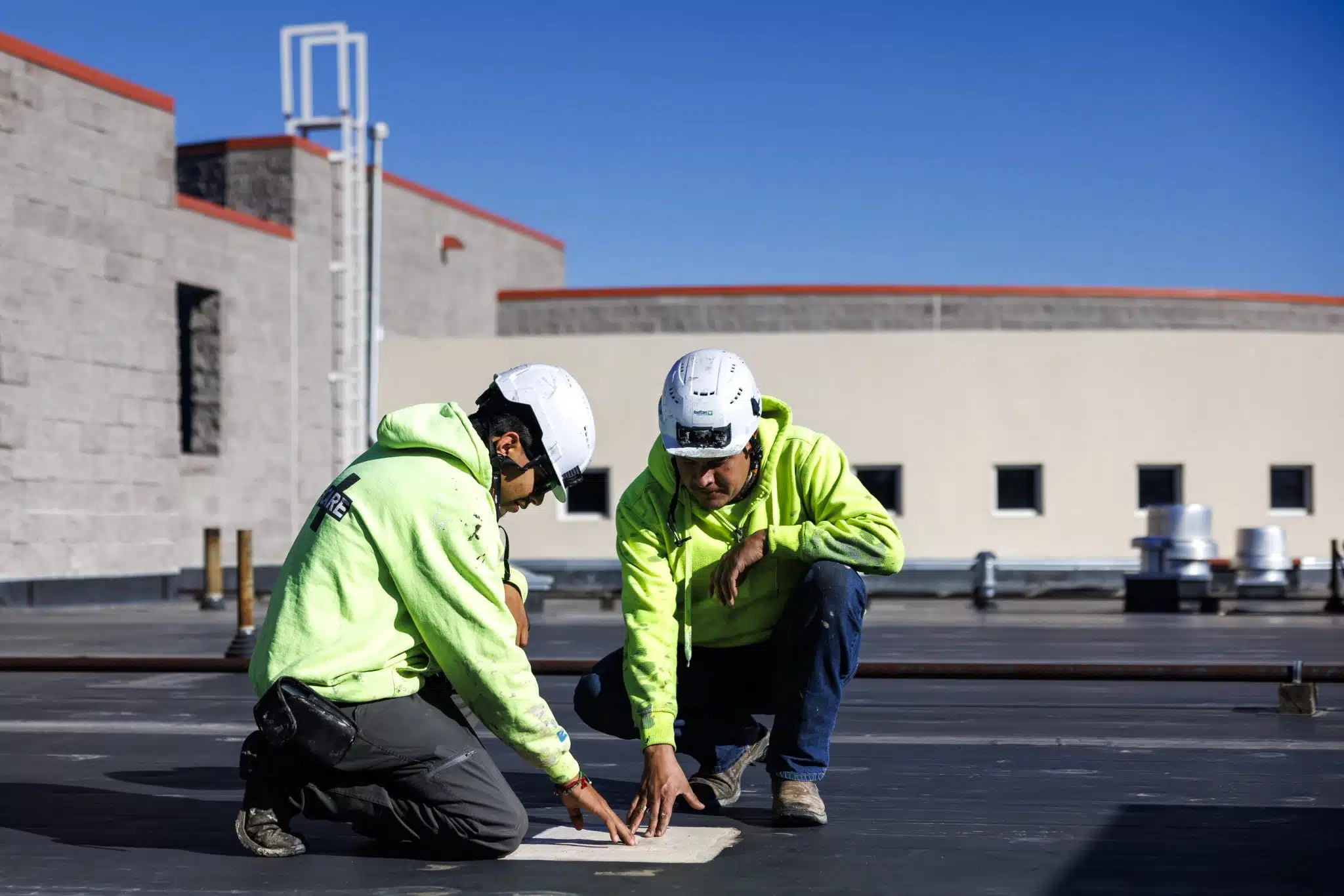
Most owners don't lose real money the day a roof gets old. They lose it the day water finds the racking aisle, the server closet, or the corner tenant suite — and part of the building has to stop. A roof service agreement is how you keep that day off the calendar. It puts the roof on a fixed schedule: two scheduled rooftop visits per year, performed by a crew that documents everything, fixes the small stuff on the spot, and answers first when you call with a problem.
Indianapolis runs on buildings that can't pause — distribution centers feeding the I-70 and I-465 freight corridors, three-shift manufacturing plants, medical suites with full afternoon schedules, and offices with tenants who read their lease remedies carefully. When a membrane opens up over any of them, the roofing invoice is usually the smallest line on the incident report. The bigger lines are wet inventory, rescheduled production, comped rent, and the overtime it takes to put an operation back together. The agreement exists so the roof never gets to write those lines.
The calendar is simple: a spring visit after the freeze-thaw season has done its worst, and a fall visit before the weather turns. What makes it work for occupied buildings is the planning wrapped into each visit. We confirm dock windows so material staging never blocks a trailer. We coordinate badge access and escorts where security requires it. Work over sensitive interiors — food lines, clean rooms, IT floors — gets flagged in advance and sequenced so nothing is being cut, primed, or sealed above them during operating hours. Tenants get notice before anyone is on the roof, and the visit ends with the field clean, the drains open, and nothing left staged overhead.
Because winters here put real load on flat roofs, agreement holders in Indianapolis get a third touch: a pre-snow visit in late fall. Drains and scuppers are cleared so meltwater always has somewhere to go, field seams and penetration flashings are checked while sealants are still workable, and anything that could turn into a mid-January leak gets closed up before the first snow load settles onto the membrane. Winter leaks are the worst kind for an occupied building — they arrive in the season when roof work is slowest and hardest — so the entire point of this visit is making sure you never need one.
Each visit is working time, not a walkthrough. Open laps get re-welded or re-adhered, sealant at terminations and pitch pans gets renewed, loose fasteners and scuffed flashing details get corrected, and debris comes off the field and out of the sumps. You receive a photo report after every visit: what we found, what we fixed, what we're watching. That file does quiet work in the background — it satisfies the documented-maintenance conditions written into most manufacturer warranties, and it turns roof spending into one predictable service line instead of surprise repair invoices scattered through the year.
No agreement prevents every emergency. What it changes is your place in line and the speed of the fix. Agreement holders get priority dispatch, and the crew that shows up already has your roof's history — system type, past repairs, known trouble details — before the ladder goes up. That is usually the difference between a same-day dry-in and a weekend of buckets on the mezzanine.
Tell us about the property and how it operates. We'll put an agreement quote in writing — visit scope, response terms, and one predictable number.
Request an Agreement Quote →
Commercial & industrial roofing across Central Indiana — documented scopes, honest priorities, and roofs scoped to how your operation runs.