EPDM commercial roof installation, recover, and repair for Indianapolis-area commercial buildings — 60-mil and 90-mil fully adhered and mechanically attached systems with manufacturer warranty documentation for Indiana's freeze-thaw climate.
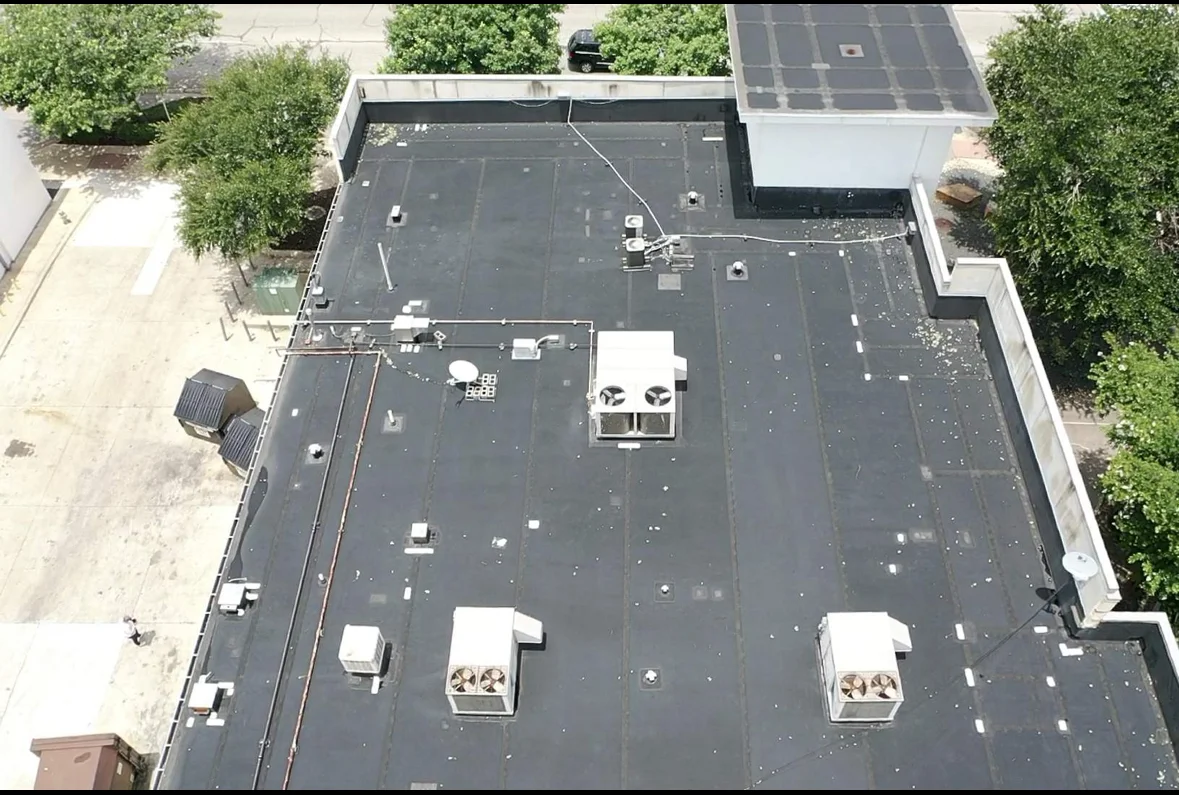
EPDM (ethylene propylene diene monomer) is a single-ply rubber membrane that has been the workhorse of commercial flat roofing in Central Indiana for decades. Its proven flexibility in freeze-thaw conditions, resistance to UV degradation, and straightforward detailing make it a strong choice for Indianapolis office buildings, warehouses, retail centers, and institutional facilities. Whether you are replacing an aging BUR system, recovering over existing insulation, or installing a new roof on a fast-track build, a properly specified EPDM system delivers a predictable 20–30 year service life with documented manufacturer warranty coverage.
EPDM is a synthetic rubber membrane manufactured in rolls, typically 45-mil, 60-mil, or 90-mil thickness. The material remains flexible at temperatures well below zero — a critical advantage in Marion County, where freeze-thaw cycling through winter months subjects roofing membranes to repeated expansion and contraction stress. EPDM's elongation properties allow it to flex with deck movement without cracking, reducing the risk of stress fractures at penetrations and field seams. Its black surface absorbs heat in winter, which can aid snow melt and reduce ice load buildup, though reflective white-coated EPDM is also available for buildings where summer cooling loads are the priority.
EPDM is installed using one of two primary attachment methods, each suited to different building conditions. Fully adhered systems bond the membrane directly to the insulation substrate using water-based or solvent-based adhesive, producing a smooth, wind-uplift-resistant assembly with no billowing. Mechanically attached systems use fastener plates driven through the insulation into the structural deck, then the membrane is lapped and seamed over the plates. Mechanically attached systems are faster to install and cost less per square, but they require careful fastener-pattern engineering to meet the wind uplift requirements of Indiana's Midwest storm corridor. For occupied commercial buildings along the I-465 corridor where minimizing installation time is critical, mechanically attached 60-mil EPDM often represents the best balance of speed, cost, and warranty.
Indianapolis commercial building owners with aging BUR or modified bitumen roofs that still have serviceable insulation may qualify for an EPDM recover rather than a full tear-off. A recover installs a new layer of cover board and EPDM membrane directly over the existing system, avoiding the landfill costs and disruption of a complete tear-off. Before specifying a recover, the existing assembly is core-sampled and infrared scanned to verify that wet insulation is below the recover threshold — typically less than 20–25% saturation across the field. Wet areas are cut out and replaced before the new membrane goes on. The result is a new manufacturer warranty on top of the existing deck without removing the original system.
Central Indiana presents four distinct seasonal stresses that inform EPDM system design. Winter freeze-thaw cycles — Indianapolis averages over 100 freeze-thaw events per year — demand membrane flexibility and seam integrity. Summer UV intensity and surface temperatures exceeding 150°F on a dark EPDM field require quality seam tape and adhesive rated for high-heat performance. Spring storm systems push wind uplift loads across large, low-slope commercial roofs, making proper termination bar and perimeter fastening patterns critical. Fall ponding from clogged drains stresses EPDM lap seams and penetration flashings; drain cleaning and slope verification are part of every pre-winter maintenance sweep. Specifying the correct mil thickness and attachment method for the building's exposure category is the baseline step that keeps a Marion County EPDM roof performing across all four seasons.
EPDM's weakest points are its terminations: curb flashings, pipe penetrations, drains, parapet walls, and expansion joints. Field seams sealed with uncured EPDM tape and bonding adhesive must be rolled and inspected. Pipe penetrations use prefabricated pipe boots or pourable sealant pockets; improperly installed pipe boots are among the most common sources of leak callbacks on EPDM roofs throughout Indianapolis commercial buildings. Coping cap integration at parapet walls and through-wall flashing detailing must account for masonry movement independent of the roof membrane. On multi-story buildings, the perimeter edge metal must be designed to the FM or ANSI/SPRI wind speed for the specific location within the I-465 metro area.
Every EPDM project begins with a written scope document that identifies the attachment method, membrane thickness, insulation R-value, and all flashing details before a single roll is opened. Manufacturer warranty registration — typically a 15-, 20-, or 25-year NDL (no-dollar-limit) warranty from brands like Firestone, Carlisle, or GAF — requires an approved installer and documented installation. Upon project completion, the owner receives the manufacturer warranty certificate, a project closeout package with as-built photos keyed to a roof diagram, and a recommended inspection schedule. The written scope and closeout package are the owner's proof of investment and the starting point for any future insurance or capital planning conversation.
Tell us about the building and the roof problem. We'll document it and put a plan in writing — with an honest repair-vs-replace recommendation and no upsell pressure.
Get a Roof Assessment →
Commercial & industrial roofing across Central Indiana — documented scopes, honest priorities, and roofs scoped to how your operation runs.