PVC commercial roofing installation and repair for Indianapolis restaurants, food processing, and commercial buildings — chemical-resistant single-ply with hot-air welded seams and manufacturer warranty documentation.
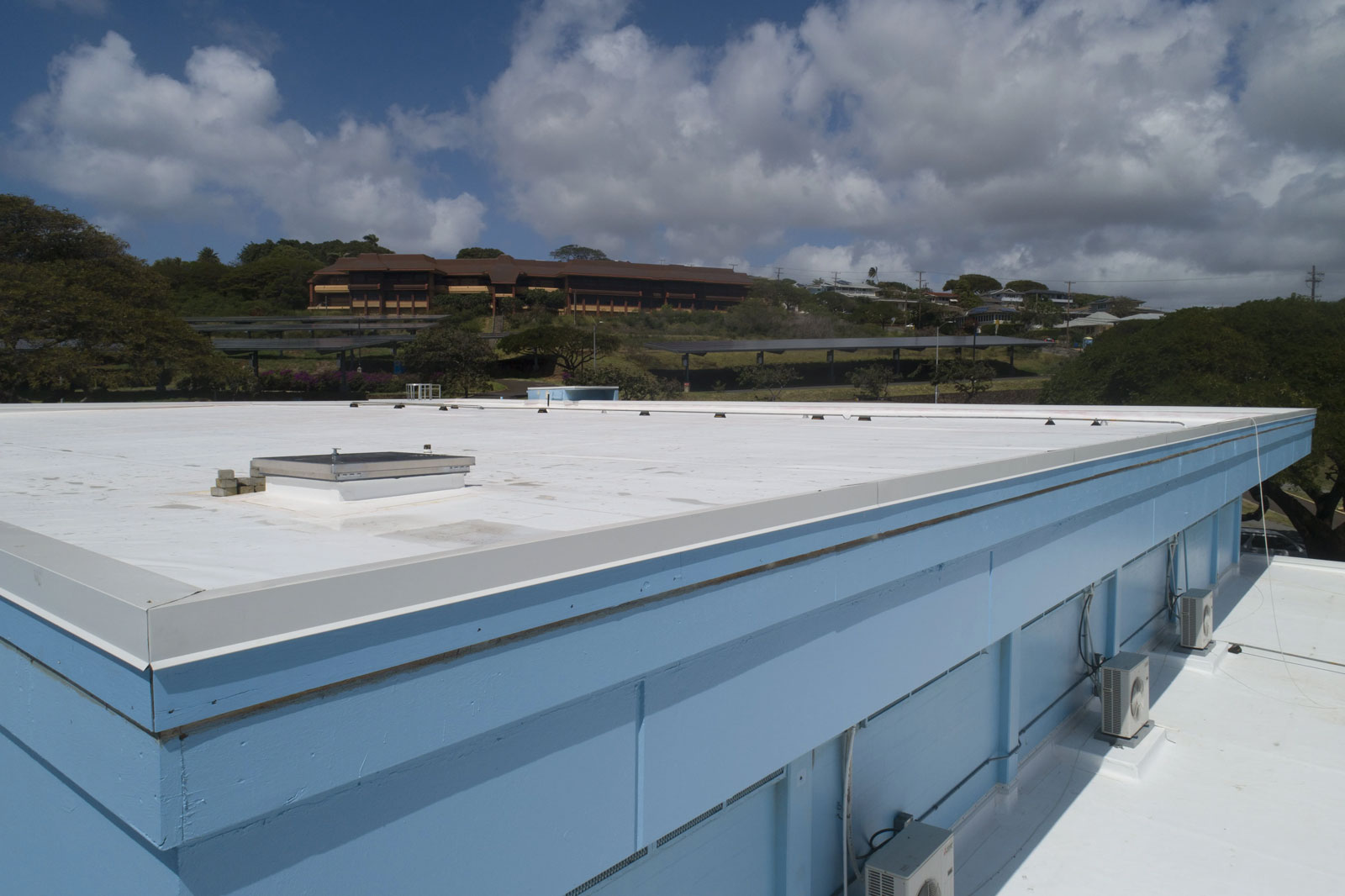
PVC (polyvinyl chloride) roofing is the specification of choice for Indianapolis commercial buildings that face chemical exposure, high grease loading, or environments where standard EPDM and TPO membranes degrade prematurely. Restaurants, food processing facilities, commercial kitchens, chemical plants, and certain industrial operations along the I-465 and I-70 corridors rely on PVC membrane's inherent chemical resistance to protect roofing investments that would otherwise fail in two to five years under incompatible exhaust or chemical discharge. PVC is also a capable general-purpose commercial roof system, but its chemistry-resistant properties are what differentiate it from other single-ply options in Marion County.
PVC membranes are manufactured from polyvinyl chloride resin blended with plasticizers, stabilizers, and UV inhibitors. The resulting membrane is highly resistant to fats, oils, greases, and many industrial chemicals — substances that attack EPDM membranes (which use petroleum-based compounding that breaks down on contact with hydrocarbon oils) and degrade TPO membranes over repeated exposure. PVC seams are heat-welded using hot-air welding equipment, producing a homogeneous weld stronger than the membrane itself — a critical advantage in flat-roof applications where seam integrity determines long-term waterproofing performance. Thickness options typically range from 50 mil to 80 mil, with 60 mil the commercial standard.
PVC roofing is indicated for several building types common in the Indianapolis commercial market. Food service buildings — restaurants, QSR (quick-service restaurant) chains, brewery facilities, and food distribution centers — discharge grease-laden exhaust through rooftop kitchen exhaust fans, and the condensate and residue from these systems accumulates on the membrane surface around the exhaust curb. PVC resists this chemical loading; EPDM and some TPO formulations do not. Chemical manufacturing and processing buildings in Indianapolis industrial parks may discharge vapors or liquids that are incompatible with standard single-ply membranes — PVC's chemical resistance profile should be verified against specific chemical exposures for each application. Beyond chemistry, PVC's heat-welded seam system makes it an excellent choice for any flat-roof application where seam longevity is a priority.
PVC roofing is installed using three primary attachment methods: mechanically attached (fastened through the membrane and insulation to the deck), fully adhered (bonded to the insulation with compatible adhesive), or ballasted (held down by river-washed ballast stone on qualifying deck structures). Mechanically attached systems are fastest to install and most cost-effective on large, simple low-slope buildings. Fully adhered systems eliminate the fastener rows visible in mechanically attached systems and provide better wind-uplift performance on buildings with high parapet heights or complex geometry. Indianapolis commercial re-roof projects typically specify mechanically attached or fully adhered PVC depending on building geometry, deck condition, and uplift requirements per local building code.
PVC membranes perform well in Central Indiana's climate extremes. The membrane remains flexible at low temperatures (PVC's glass transition temperature is well below Indianapolis winter minimums), resisting the cracking and embrittlement that aging BUR and some modified bitumen systems exhibit after repeated freeze-thaw cycling. Summer UV loading is addressed by titanium dioxide-stabilized formulations and reflective white surface — white PVC membranes deliver an initial solar reflectance above 0.80, reducing cooling loads on Indianapolis commercial buildings during the July–August heat period. Midwest hail events produce divots or fractures in PVC membranes that should be professionally assessed after any significant storm — heat-weld repairs are straightforward and restore full membrane integrity.
All three single-ply membrane types are appropriate for Indianapolis commercial roofing, but each fits different building profiles. PVC is preferred when chemical resistance (grease, oils, fats, industrial chemicals) is required, or when the owner wants the seam security of heat-welded laps. TPO is the most cost-effective option for large low-slope general commercial applications and carries strong manufacturer warranty programs. EPDM is the proven long-life system for non-chemical applications, with field data extending 30-plus years on original installations. We specify based on the building's use, existing system, and project budget — not a single preferred product line.
Every PVC roofing project includes a written scope with membrane manufacturer and product specifications, attachment method, insulation type and R-value, and warranty tier. Pre-installation condition documentation, installation inspection records supporting manufacturer warranty registration, and a final closeout package are standard. Manufacturer warranties on qualifying PVC systems range from 15 to 20 years with NDL (No Dollar Limit) options available through major manufacturers. Workmanship warranty is provided in writing with each project.
Tell us about the building and the roof problem. We'll document it and put a plan in writing — with an honest repair-vs-replace recommendation and no upsell pressure.
Get a Roof Assessment →
Commercial & industrial roofing across Central Indiana — documented scopes, honest priorities, and roofs scoped to how your operation runs.