Ice dam, snow load, and freeze-thaw damage inspection and documentation for Indianapolis commercial roofs through Central Indiana winters.
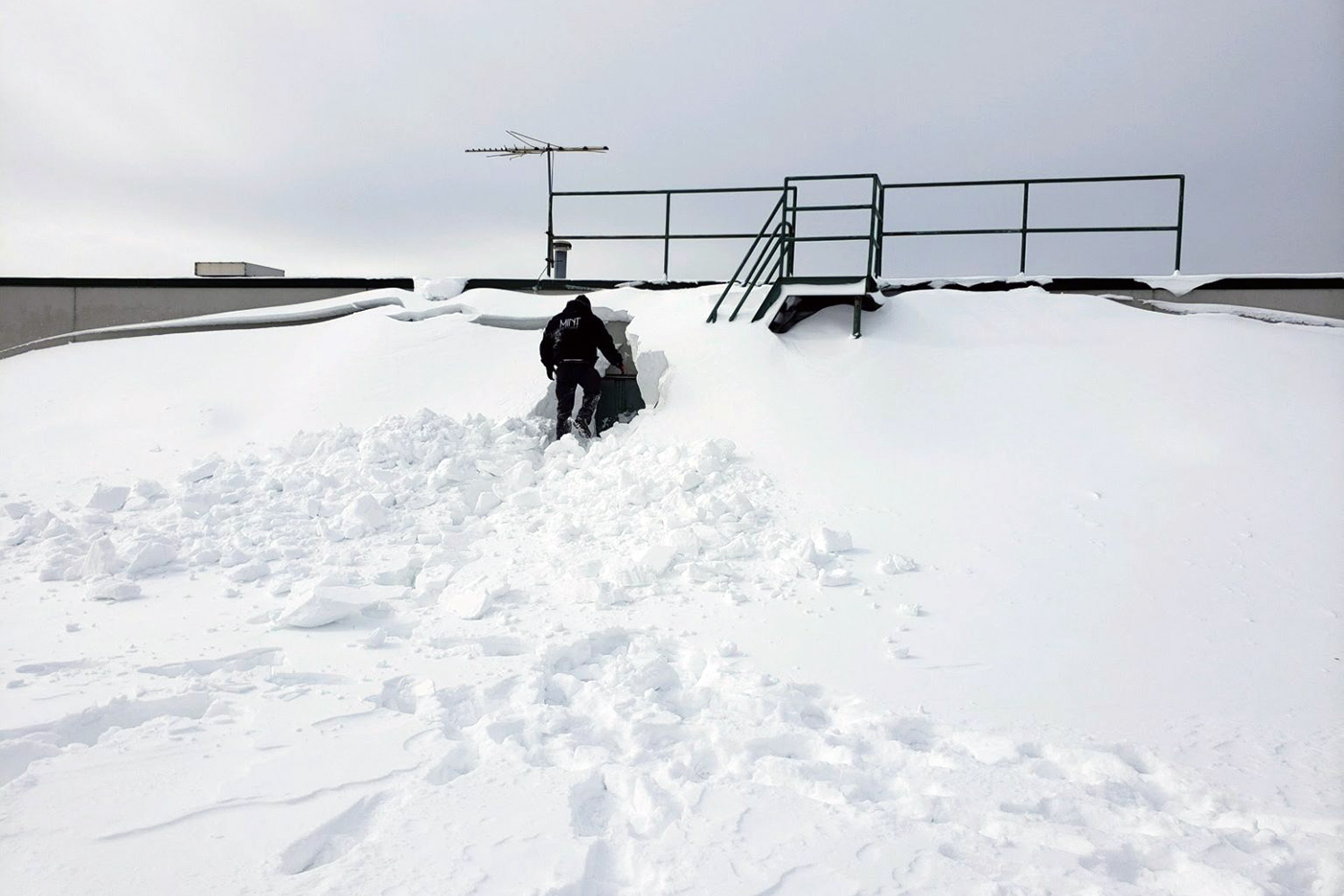
Central Indiana winters put a different kind of stress on a commercial roof than summer storms do. Sustained snow load, freeze-thaw cycling, and ice dams that form where poor drainage or inadequate insulation lets snow melt and refreeze at the roof edge are the main threats an Indianapolis property owner deals with between December and March. None of it looks as dramatic as a hail strike or a torn membrane after a windstorm, but snow and ice damage claims are just as real — and just as easy to underdocument if the roof isn't inspected with winter-specific damage patterns in mind.
Ice dams form when heat loss from the building interior melts snow on the roof deck while the roof edge and gutters stay below freezing — the meltwater refreezes at the edge, builds up, and backs water under the membrane or flashing. On flat and low-slope commercial roofs this shows up as water intrusion at parapets, scuppers, and drain areas rather than at a sloped eave, but the mechanism is the same. Sustained snow load, especially after a heavy, wet snowfall followed by more accumulation before the first thaw, can stress older membrane systems, aggravate existing ponding areas, and in severe cases contribute to structural deflection on roofs already near their design load limit. Freeze-thaw cycling repeatedly expands and contracts trapped moisture in seams, flashing laps, and any area where water has already gotten past the membrane surface, widening small existing defects into larger ones over a winter season.
Snow and ice claims need the same rigor as a hail or wind claim, adapted to winter conditions: photographs of ice damming locations and any resulting water intrusion, drain and scupper inspection to confirm whether blocked or undersized drainage contributed to the ice buildup, and interior inspection below any affected roof section to document ceiling or wall damage connected to the winter event. Where snow load is a factor, documentation includes photographs of accumulation depth and duration alongside any observed structural response. Because ice dam damage often reveals itself gradually as water finds its way inside over days or weeks rather than in a single dramatic event, corroborating the timeline — which storm or cold snap, and when the resulting damage was first observed — matters more here than on a single-event hail or wind claim.
An active leak during a Central Indiana cold snap needs a different stabilization approach than a summer storm breach — temporary materials and sealants have to perform in freezing conditions, and any snow or ice removal near the breach has to be done carefully to avoid further membrane damage. We document the original damage before performing any temporary winter stabilization, and once conditions allow, we clear drains and scuppers to prevent the same ice dam from reforming before the permanent repair is complete.
We walk the roof with the adjuster once conditions allow safe access, showing ice dam locations, drainage deficiencies if any contributed, and the resulting membrane or flashing damage. Winter damage claims sometimes take more explanation than a single-event storm claim because the timeline is less obvious — we lay out the documented sequence so the connection between the winter conditions and the roof damage is clear.
We're your roofing contractor, not a public adjuster — we document the ice and snow damage and the conditions that caused it so your claim reflects what actually happened to the roof.
We'll inspect the roof, document the damage and its cause, and give you a written scope for your claim.
Get a Roof Assessment →
Commercial & industrial roofing across Central Indiana — documented scopes, honest priorities, and roofs scoped to how your operation runs.