Commercial roofing for Indianapolis food and beverage processing plants — assemblies that handle washdown humidity, heavy rooftop refrigeration loads, and strict sanitation demands.
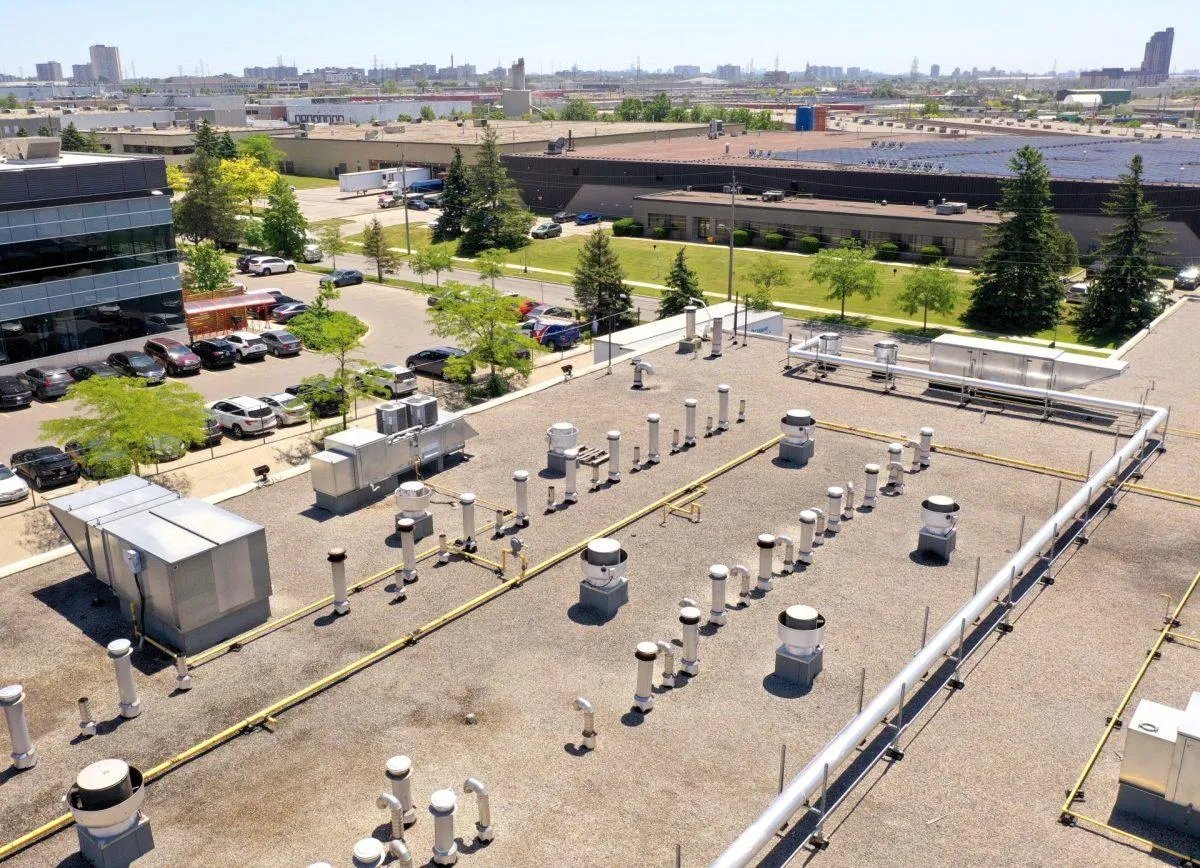
Food and beverage processing has deep roots in Indianapolis, from the bakeries, dairies, and meat and protein plants on the industrial southwest and southeast sides to the cold-storage and distribution operations clustered around the I-70 and I-465 freight corridors. These plants put two demands on a roof that almost no other building does at the same time: the interior is constantly humid from sanitation washdowns, and the roof itself carries heavy, vibrating refrigeration equipment. Manage one and ignore the other and the roof fails early. We build food-plant roofs that handle both at once.
A processing floor that gets hosed down every shift pushes warm, saturated air upward, and in many plants that air also carries fats, sugars, salts, and cleaning chemistry. That interior moisture is relentless, and it goes after the roof from the underside. In an Indianapolis winter, when the deck is cold and the plant interior is warm and wet, vapor drives hard toward the underside of the assembly and condenses inside it if nothing stops it.
Left unmanaged, that creates the same hidden failures we see on every high-humidity building — but faster, because food-plant air is often more aggressive:
So the first thing we design is a continuous vapor retarder on the warm side of the assembly, sized and detailed for a genuinely wet interior. On a food plant this layer is doing real structural protection, not box-checking. We pair it with insulation and a membrane chosen to resist the specific exposures of the operation, and we coordinate with the plant's ventilation so wet air is exhausted rather than left to push into the roof.
Cold storage, blast freezers, and refrigerated processing rooms mean the roof of a food plant is loaded with heavy mechanical equipment: large refrigeration units, condensers, evaporators, ammonia or CO2 system components, and the associated piping and structural supports. This equipment is heavy, it vibrates, and it often runs continuously. The roof structure has to carry the dead load, the membrane and flashings have to survive the vibration, and the whole assembly has to handle equipment that is being serviced regularly.
We address these loads directly:
Refrigerated buildings also create condensation on the cold underside of the deck if the assembly is wrong, so getting the insulation and vapor strategy right protects both the energy bill and the structure.
Food-safety standards do not stop at the ceiling. A roof leak in a processing plant can contaminate product, shut down a line, and trigger a serious regulatory response, which is why we treat watertightness here with the same seriousness we bring to a lab. Drains and overflows have to actually work, because standing water and the debris that collects in it are exactly what an auditor and a pest-control program do not want to see. We design positive drainage, keep the scuppers and drains clear, and detail the roof so water leaves it instead of sitting on it.
We also keep the work itself clean. During any reroof over an operating plant, debris and contamination control are not afterthoughts — they protect the product below and the plant's standing with its inspectors and customers.
For a plant with significant cold storage, the roof is also an energy asset. A wet, underperforming assembly forces the refrigeration system to fight heat gain it should never see, and that runs day and night across an operation that may never shut down. We keep the insulation continuous and dry, detail the assembly so the cold side stays sealed, and on the right buildings specify a reflective membrane that cuts summer heat load through the deck. In an Indianapolis summer that reflectivity meaningfully reduces the work the compressors have to do, and the savings compound over the life of the roof. Getting the thermal design right protects the product, the equipment, and the utility bill all at once.
Food plants run on tight production schedules, and many operate around the clock. A roof project cannot become a reason a line goes down. We phase reroofs to keep production areas protected and operating, sequence work over storage and dock areas before live processing zones where we can, and coordinate around sanitation shifts and production windows. When we have to work over an active area, we maintain the roof's integrity at every stage so the plant is never exposed to weather, and we contain everything so nothing falls into the process below.
Because the worst damage on a food-plant roof hides under the membrane and inside the assembly, regular inspection is essential. We recommend a proactive semiannual program plus checks after major Indianapolis storms and hard freeze-thaw stretches. On each visit we examine the membrane and seams for chemical and grease attack, probe for wet or soft insulation, inspect the heavily loaded refrigeration zones and their curbs, look for corrosion where we can access the deck, and clear the drains. We document findings for the plant's food-safety and maintenance records so the roof's condition is always part of the audit trail.
If you operate a bakery, dairy, protein plant, beverage facility, or cold-storage operation in the Indianapolis area and your roof is fighting washdown humidity, carrying heavy refrigeration loads, or showing signs of interior corrosion, we can help. We will assess the assembly inside and out, evaluate the equipment loads and penetrations, and design a roof built for a plant that runs wet, cold, and continuously. Reach out to schedule an evaluation.
Tell us about the building and the roof problem. We'll document it and put a plan in writing — with an honest repair-vs-replace recommendation and no upsell pressure.
Get a Roof Assessment →
Commercial & industrial roofing across Central Indiana — documented scopes, honest priorities, and roofs scoped to how your operation runs.