Roof Recover and Overlay for commercial buildings across Indianapolis.
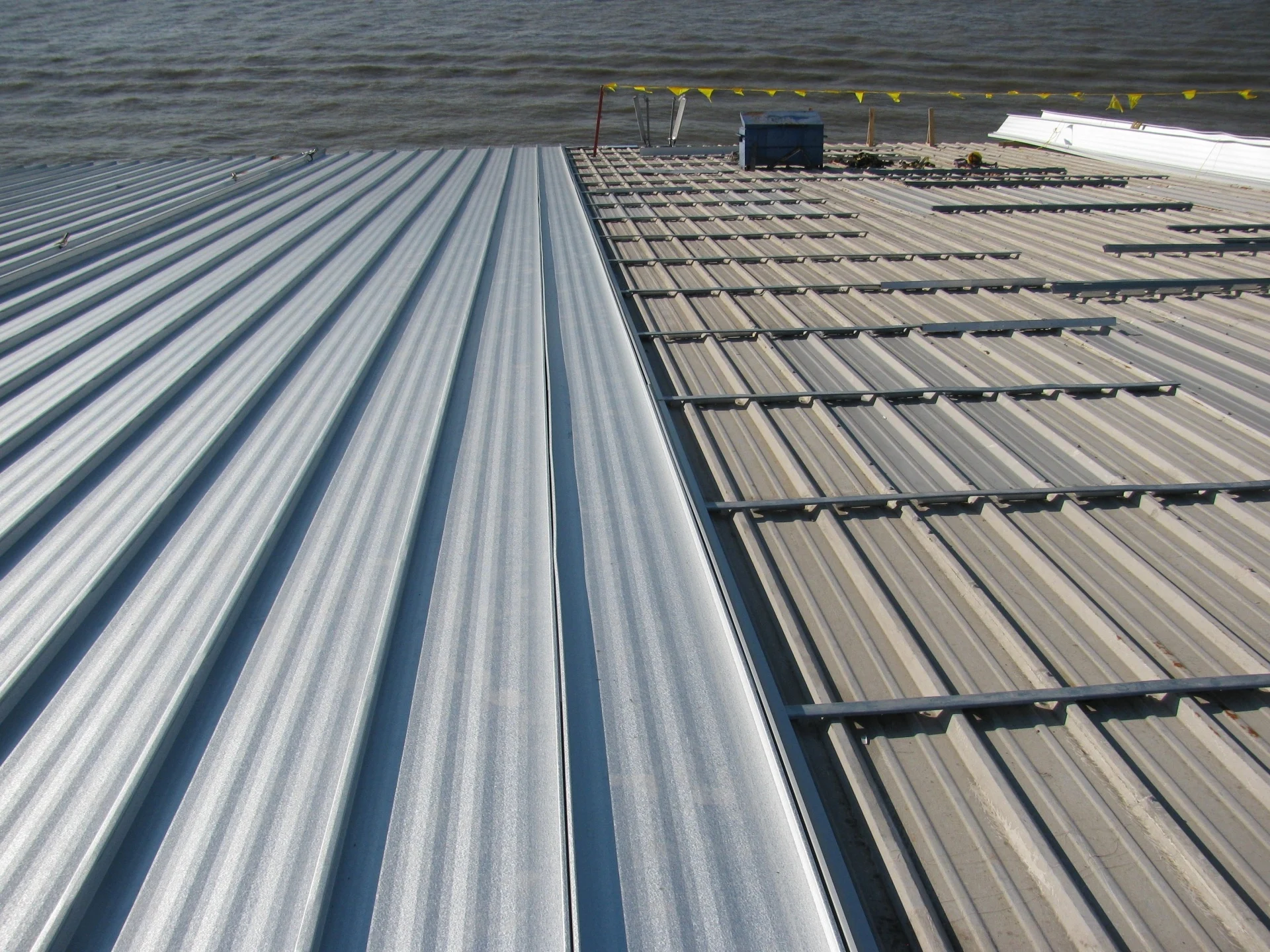
A roof recover and overlay installs a new membrane system directly over the existing roof without tearing off the current system, provided the existing roof meets eligibility criteria. For Indianapolis commercial property owners whose roof deck and existing insulation are structurally sound and free of widespread moisture saturation, a recover can deliver a new warranted roof at a fraction of the time and cost of a full tear-off and replacement. The key qualifier is that eligibility must be established through moisture scanning and core cuts — a recover applied over wet insulation will trap that moisture and accelerate failure of the new system.
In a full re-roofing project, all existing layers are removed and replaced from deck up. In a recover, the existing membrane and insulation remain in place and a new cover board and membrane are installed on top. This eliminates the labor, disposal, and downtime costs of tear-off. The building interior is never exposed to weather because the existing roof remains intact until the new membrane is in place. On a project where the roof qualifies for recover, the installed cost is typically 40 to 60 percent of full replacement.
Building code limits the number of roof layers on a structure — most jurisdictions, including those in Marion County, Indiana, follow the International Building Code allowance of no more than two roof systems before a tear-off is required. Confirming the number of existing layers is a mandatory first step in any recover evaluation.
Before a recover is specified, the existing roof is evaluated using two methods. Nuclear or infrared moisture scanning maps wet insulation across the entire roof field. Core cuts at multiple locations confirm the number of existing layers, insulation type, thickness, and condition, and verify whether the deck is wood, steel, concrete, or lightweight insulating concrete. Wet insulation areas identified by scanning must be removed and replaced — they cannot be recovered over. If wet areas exceed 25 percent of roof area, the economics and warranty eligibility of a recover become questionable and a full tear-off is typically the better path.
The existing surface must also be structurally capable of supporting the added weight of a cover board and new membrane. Indianapolis commercial roofs near the edge of their structural capacity — common in older buildings with lightweight steel deck — require an engineer's sign-off before recover is approved.
Central Indiana's freeze-thaw cycling puts particular stress on existing membrane flashings at penetrations and perimeter edge metal. During a recover project, all perimeter and penetration flashings are replaced or re-flashed — the existing base flashings cannot be simply overlaid because they are the most deteriorated components of any aging roof. Properly re-flashed penetrations and edge metal in a recover system perform as well as those in a full re-roof; improperly overlaid flashings fail first and create leaks that are difficult to trace because the entry point is between layers.
A recover system typically installs a half-inch to one-inch polyisocyanurate or gypsum cover board over the existing membrane before the new top membrane is applied. The cover board provides a smooth, fastener-free substrate for the new membrane and adds insulation value. TPO and EPDM are the most common new membrane types for Indianapolis recover projects. Where additional thermal performance is required to meet current energy code, thicker insulation layers can be incorporated into the cover board specification, effectively upgrading the roof's R-value as part of the recover.
A recover improves waterproofing and adds insulation value, but it does not address structural deck issues, does not remove existing wet insulation outside the excised wet areas, and does not reset the roof's warranty clock on all components — the warranty covers the new membrane and new insulation only. If the existing system has widespread adhesion failures, severely distorted insulation, or significant deck corrosion, a recover will mask those conditions temporarily and result in a premature failure of the new system. Honest pre-project assessment protects the owner from that outcome.
A completed recover project is documented with pre-construction moisture scan maps, core-cut records, photograph documentation of wet-area removals, and a marked-up roof plan showing all excised and repaired zones. Manufacturer warranties on recover systems match those available for full replacement — typically 10 to 20 years depending on membrane thickness and system specification. Workmanship warranties are issued separately by the contractor.
Tell us about the building and the roof problem. We'll document it and put a plan in writing — with an honest repair-vs-replace recommendation and no upsell pressure.
Get a Roof Assessment →
Commercial & industrial roofing across Central Indiana — documented scopes, honest priorities, and roofs scoped to how your operation runs.