Commercial roofing for manufacturing plants, assembly facilities, and industrial buildings throughout Indianapolis, IN.
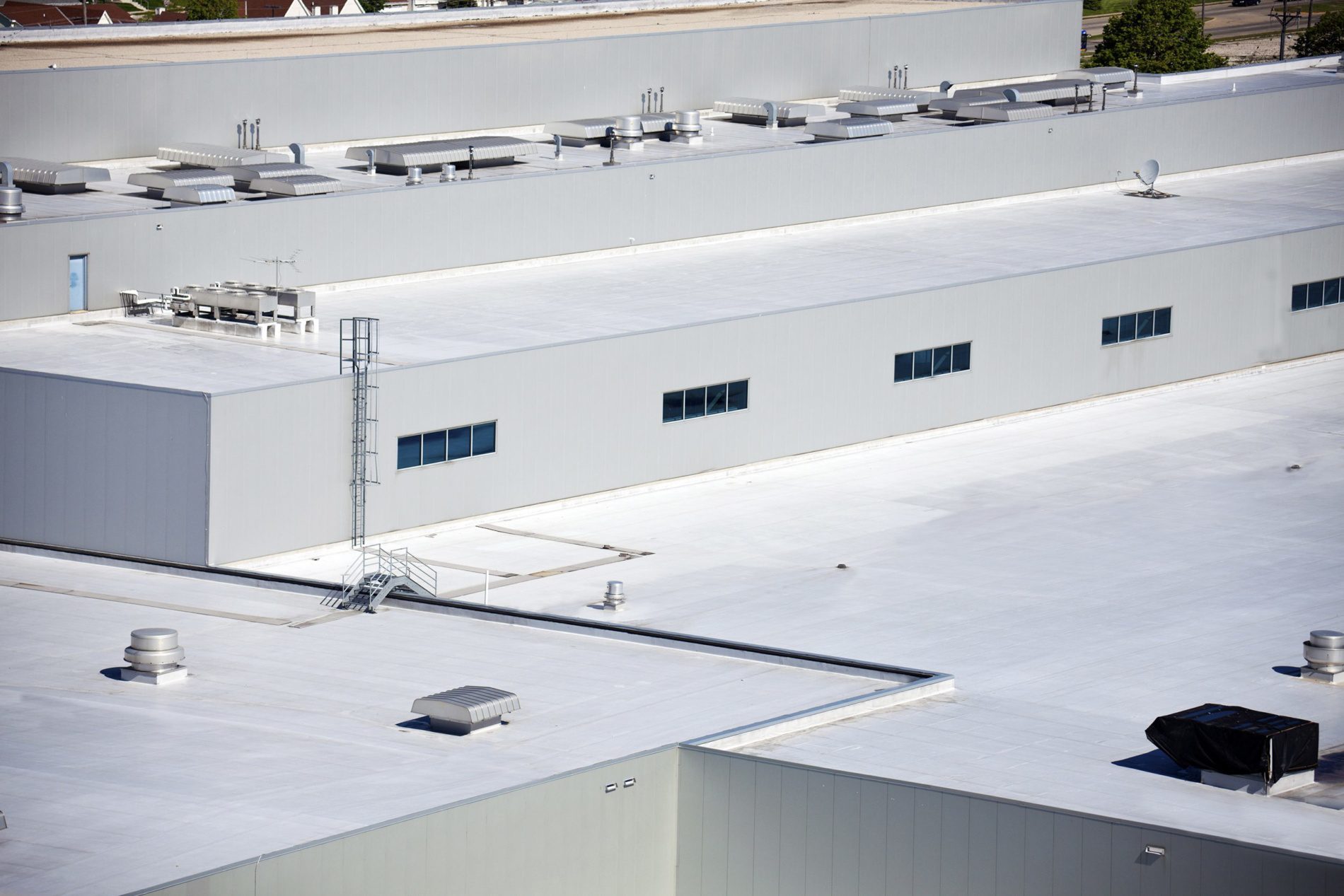
Manufacturing plants, assembly facilities, and fabrication buildings throughout Indianapolis and Marion County are among the most demanding roofing environments in the commercial sector. These facilities operate on production schedules that leave minimal tolerance for disruption, generate internal heat and humidity loads that stress roof assemblies from below, carry heavy rooftop equipment that creates concentrated penetration loads, and span large footprints where a single roofing failure can impact tens of thousands of square feet of production floor. Indianapolis has one of the Midwest's largest concentrations of manufacturing employment, with automotive, pharmaceutical, food processing, and advanced manufacturing operations distributed across the metro. Each industry presents distinct roofing requirements that a qualified commercial roofing contractor must understand before developing a specification.
Metal deck construction is the standard structural platform for Indianapolis manufacturing facilities, typically paired with mechanically attached or fully adhered single-ply membranes over polyisocyanurate insulation. Mechanically attached TPO at 60-mil or 80-mil thickness dominates new construction and replacement work due to its wind uplift performance, energy code compliance, and 20–25 year manufacturer warranty availability. EPDM is common on older manufacturing buildings and recover projects where the existing insulation is serviceable. Older Indianapolis manufacturing facilities — particularly those built before 1985 — may carry built-up roofing (BUR) or early SBS modified bitumen systems that are approaching or have exceeded their design life. These systems typically qualify for recover if moisture saturation is below threshold, or full tear-off if the insulation is significantly wet.
Manufacturing processes that introduce moisture, heat, or chemical vapors into the building environment create vapor pressure conditions that drive moisture into the roof assembly from the interior. Food processing facilities, metal fabrication plants with coolant systems, pharmaceutical cleanrooms, and automotive paint booths are all examples of interior environments that require a vapor retarder specification above and beyond what a dry office building demands. Without a correctly positioned vapor retarder on the warm (interior) side of the insulation assembly, condensation accumulates in the polyisocyanurate insulation over time, reducing its R-value and eventually causing corrosion on the structural deck below. In Indianapolis, where manufacturing buildings often operate year-round with significant interior/exterior temperature differentials, a building science analysis of the interior humidity load should precede the roofing specification rather than follow it.
Manufacturing facilities carry rooftop equipment loads that require structural consideration beyond standard commercial buildings: large make-up air units, exhaust fans for process ventilation, cooling towers, compressed air systems, and custom process exhaust stacks all create curb penetrations and concentrated roof loads. When replacing a roof on an Indianapolis manufacturing facility, every piece of rooftop equipment must be catalogued with its weight, curb dimensions, and clearance requirements. The roofing scope must include a penetration schedule that addresses every curb flashing, pipe penetration, and conduit entry point on the roof. Equipment that is near end of life should be evaluated for replacement concurrent with the roofing project — replacing a large RTU curb flashing twice in five years because the unit was not replaced during the roofing project is a common and avoidable cost on Indianapolis manufacturing buildings.
Indianapolis manufacturing plants with continuous or multi-shift production schedules cannot accommodate roofing work that requires evacuating the production floor. A well-planned manufacturing roof project uses phased construction — working on one section at a time while the adjacent areas remain in operation — with daily waterproofing closeout at all open perimeters before the crew departs. Tear-off operations create vibration and noise that can affect precision manufacturing processes; scheduling tear-off phases for weekend shutdowns, maintenance shifts, or between production runs is standard practice on sensitive facilities. Material staging on the roof or adjacent to the building must maintain clear emergency egress routes and not obstruct loading dock access. The access and phasing plan is a written deliverable submitted to the plant manager and safety coordinator before work begins, not assembled informally during mobilization.
Central Indiana's seasonal extremes create a demanding test for manufacturing roof assemblies. Winter freeze-thaw cycling — Indianapolis averages over 100 freeze-thaw events per year — stresses membrane seams and flashing terminations on large-span roofs where thermal movement is amplified. Summer heat combined with interior process heat creates exceptionally high surface temperatures on dark membranes, accelerating adhesive and seam degradation on older systems. Spring storm systems drive wind uplift loads on the large, unbroken roof planes typical of Indianapolis manufacturing buildings; corner zones of large-footprint plants require fastener patterns engineered specifically for the building's wind exposure. Fall drain maintenance — clearing debris before winter freeze — is critical on manufacturing roofs where production processes generate airborne particulate that can accumulate in roof drains.
Every manufacturing facility roofing project begins with a written scope that includes the attachment method, fastener pattern engineering, vapor retarder specification, a penetration schedule, and a phasing plan compatible with the plant's production schedule. For large-footprint buildings, a pre-installation pull test confirms deck fastener holding capacity before the full installation proceeds. Upon project completion, the plant manager and ownership group receive manufacturer warranty registration, as-built documentation keyed to a roof plan, the penetration schedule with post-installation records, and a maintenance schedule that identifies the frequency and scope of required inspections to maintain the manufacturer warranty in force.
Tell us about the building and the roof problem. We'll document it and put a plan in writing — with an honest repair-vs-replace recommendation and no upsell pressure.
Get a Roof Assessment →
Commercial & industrial roofing across Central Indiana — documented scopes, honest priorities, and roofs scoped to how your operation runs.