Fluid-applied silicone roof restoration for Indianapolis commercial buildings — 10, 15, and 20-year manufacturer warranty paths, substrate qualification protocol, and honest guidance on when coating is not the right scope.
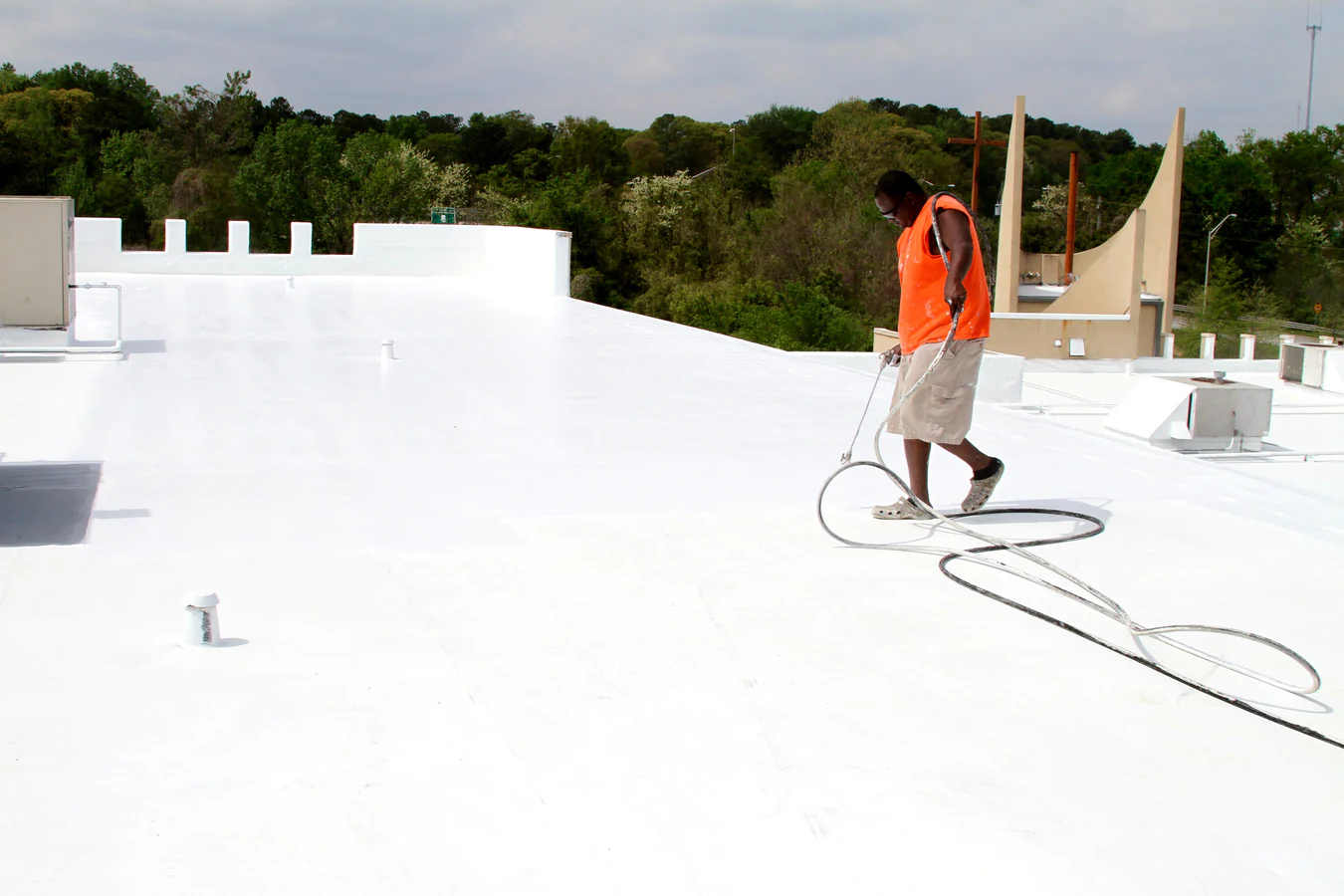
Silicone roof coating systems offer Indianapolis commercial building owners a way to extend the service life of an aging flat roof without the cost and disruption of a full tear-off and replacement. When an existing TPO, EPDM, modified bitumen, or metal roof is structurally sound but showing surface degradation, lap seal failures, or UV fatigue, a fluid-applied silicone restoration system can reseal the membrane, improve reflectivity, and carry a new manufacturer-backed warranty — often at 30 to 50 percent of the cost of replacement. Commercial Roofers Indianapolis evaluates, qualifies, and installs silicone coating systems across Marion County and Central Indiana with documented substrate protocols and manufacturer-compliant application procedures.
A silicone roof coating is a fluid-applied, moisture-cure elastomeric coating sprayed or rolled directly over the existing roof membrane in one or two passes to achieve a specified mil thickness — typically 20 to 30 dry mils for a 10-year warranty path, and 30 to 40 mils for a 15 or 20-year path. The cured coating is permanently flexible, UV-stable, and resistant to ponding water — a significant advantage in Indianapolis where flat roofs routinely hold standing water after heavy spring storms. Unlike acrylic coatings, silicone does not re-emulsify in wet conditions, making it the preferred choice for roofs with drainage limitations.
Silicone coating is not appropriate for every Indianapolis flat roof. The existing membrane must be structurally intact with no active delamination, no saturated insulation sections (confirmed by core pulls or infrared survey), and no deck failures. Lap seams, flashings, and penetration details are reinforced with silicone sealant or fabric before the field coat is applied. Any wet insulation found during the pre-application inspection must be removed and replaced — coating over wet insulation traps moisture and creates a warranty void. The substrate qualification process is documented and included in the project file.
Central Indiana's climate makes silicone coating performance particularly relevant. Indianapolis summers bring high UV index days that degrade uncoated membrane surfaces and increase rooftop temperatures — a white or light-gray silicone coat can reduce rooftop surface temperatures by 40 to 60 degrees Fahrenheit and lower cooling loads in occupied buildings. Indianapolis winters bring freeze-thaw cycling that stresses membrane laps and penetration flashings; the flexible, seamless silicone film bridges minor movement without cracking. Midwest spring storms that leave standing water on flat roofs are handled by silicone's ponding water resistance without the coating softening or washing away.
Commercial silicone coating manufacturers offer NDL (No Dollar Limit) warranty programs tied to specific application thickness thresholds and substrate qualification requirements. Common warranty terms for Indianapolis commercial buildings are 10, 15, and 20 years. Achieving the higher warranty tiers requires greater applied thickness and, for some manufacturers, a third-party inspection during or after application. Commercial Roofers Indianapolis works within manufacturer-approved applicator programs and completes the warranty registration paperwork as part of the project closeout so that the building owner holds a registered, enforceable warranty document.
The coating-vs-replace decision for Indianapolis flat roofs hinges on substrate condition. If infrared moisture survey and core sampling show that less than 25 percent of the roof field has wet or damaged insulation, a coating system is typically the economical choice. If saturation exceeds that threshold, or if the deck itself shows deterioration, tear-off and replacement preserves the investment better than coating over a failing substrate. Building owners receive a written recommendation with supporting data — not a sales-driven recommendation — so the decision is based on actual field conditions.
Tell us about the building and the roof problem. We'll document it and put a plan in writing — with an honest repair-vs-replace recommendation and no upsell pressure.
Get a Roof Assessment →
Commercial & industrial roofing across Central Indiana — documented scopes, honest priorities, and roofs scoped to how your operation runs.